
For decades, waste was viewed as the end of the line as something to landfill, incinerate or simply remove from sight. Today, that thinking is rapidly changing. Across the UK and beyond, food waste is increasingly being recognised not as rubbish, but as a valuable resource capable of generating renewable energy, reducing emissions, supporting agriculture and strengthening the circular economy.
At the centre of this transformation is anaerobic digestion (AD), a proven technology that is helping businesses, councils and organisations rethink waste entirely.
As one of the UK’s leading food waste recycling specialists, Keenan Recycling sees every day how food waste can be converted into something positive — renewable electricity, biomethane and nutrient-rich fertiliser instead of contributing to landfill and greenhouse gas emissions.
UK’s food waste challenge
Food waste remains one of the biggest environmental challenges facing the UK. Millions of tonnes of edible and inedible food are discarded every year from hospitality, retail, manufacturing, healthcare and households.
Traditionally, much of this waste ended up in landfill, where it decomposes and releases methane directly into the atmosphere. Methane is significantly more damaging than carbon dioxide as a greenhouse gas, making food waste disposal a major climate issue.
At the same time, businesses are facing rising disposal costs, increasing landfill tax, tighter environmental regulations and the rollout of #SimplerRecycling legislation across England.
This is creating a major shift in how food waste is managed.
Anaerobic Digestion turns waste into resource
Anaerobic digestion is one of the most effective solutions available for dealing with unavoidable food waste sustainably.
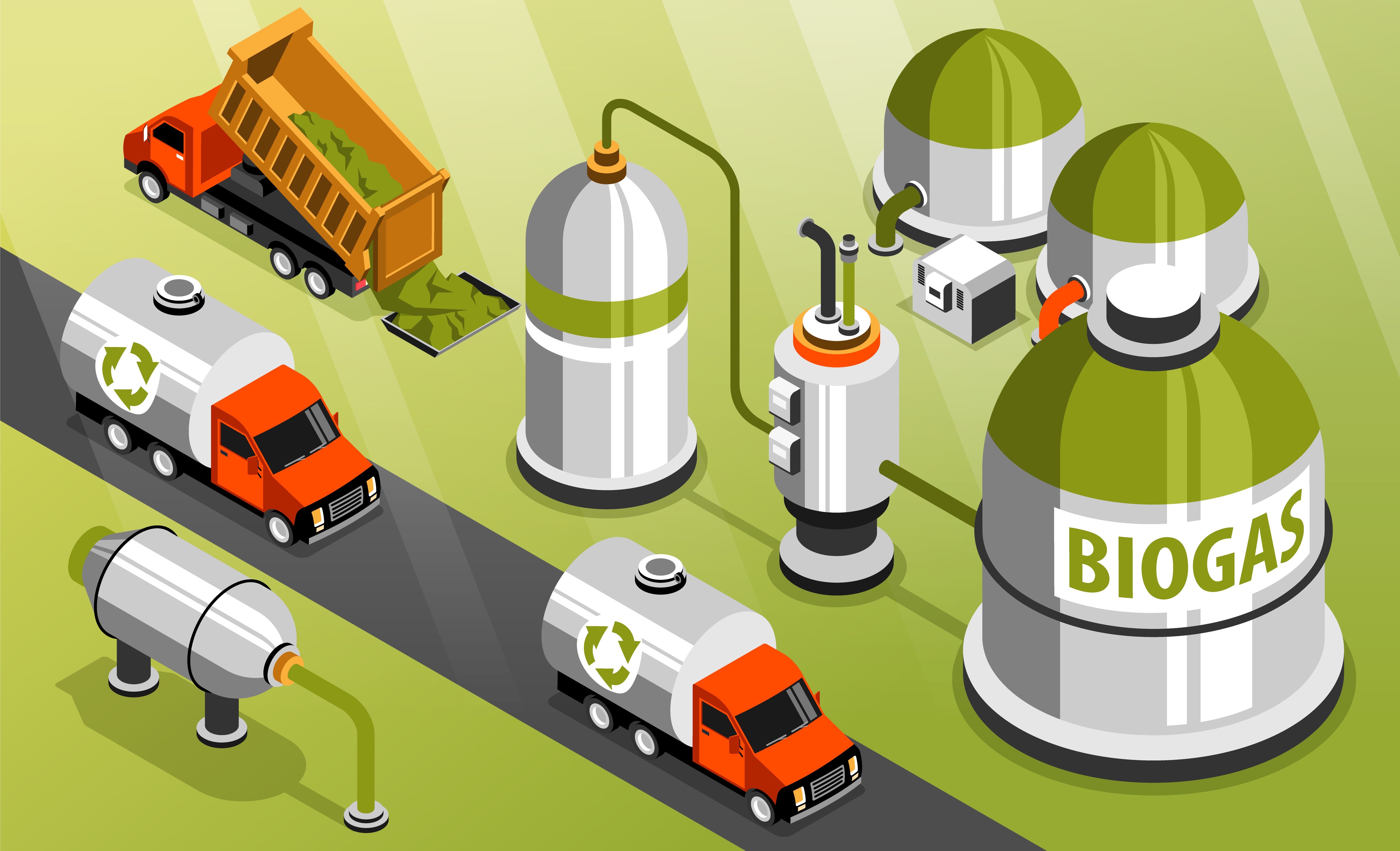
The process works by breaking down food waste in a sealed, oxygen-free environment. Microorganisms naturally digest the material, producing biogas and digestate.
The biogas can then be used to generate renewable electricity, heat or biomethane fuel, while the digestate becomes nutrient-rich fertiliser that can be returned to farmland to grow more food.
It is a true circular economy solution: Food becomes energy. Waste becomes resource.
This process not only diverts waste from landfill but also supports the UK’s renewable energy goals and helps reduce dependency on fossil fuels.
Why AD matters more than ever
The UK’s energy and environmental challenges have placed anaerobic digestion firmly in the spotlight.
Recent industry discussions have highlighted the major opportunity to expand and optimise AD infrastructure to deliver both environmental and economic benefits. Across agriculture, hospitality and local government, organisations are increasingly recognising the role food waste recycling can play in reducing emissions while supporting energy resilience.
As food waste collections become mandatory under Simpler Recycling reforms, more businesses and councils are expected to adopt separate food waste collections and invest in long-term sustainable waste strategies.
This is not simply about compliance. It is about building smarter systems that recover value from waste rather than paying to dispose of it.
Innovation is changing waste management
Globally, waste management is entering a new era driven by innovation, data and circular economy thinking.
Advanced technologies are transforming how waste is collected, sorted and processed. Artificial intelligence is improving recycling accuracy, smart route optimisation is reducing fuel use, and digital systems are helping organisations track waste streams more effectively.
But one of the most impactful developments remains the growth of anaerobic digestion.
Modern AD facilities are no longer viewed as niche infrastructure. They are increasingly recognised as essential components of a sustainable energy and waste management system.
The environmental benefits are substantial:
- Reduced landfill use
- Lower greenhouse gas emissions
- Renewable energy generation
- Reduced reliance on fossil fuels
- Nutrient recovery for agriculture
- Improved recycling performance
At a time when businesses are under pressure to reduce emissions and improve sustainability reporting, food waste recycling through AD offers measurable environmental impact.
Supporting Simpler Recycling across the UK
The rollout of Simpler Recycling legislation means businesses across England must separate food waste from general waste streams.
For many organisations, particularly in hospitality and food service, this represents a major operational shift. However, businesses that act early are already discovering the advantages:
- Reduced contamination
- Improved recycling rates
- Lower disposal costs
- Better environmental performance
- Stronger sustainability credentials
At Keenan Recycling, we support organisations across the UK with reliable food waste collections and sustainable recycling solutions designed around operational simplicity and compliance.
Our services help ensure unavoidable food waste is transformed into renewable energy through anaerobic digestion rather than sent to landfill.
Waste is no longer waste
One of the biggest changes happening across the waste sector is a mindset shift.
Food waste is no longer simply something to dispose of. It is now recognised as a valuable energy source, a contributor to net zero ambitions and a critical part of the circular economy. This transformation is already happening across the UK in supermarkets, hospitality venues, hospitals, schools, manufacturers and local authorities.
The future of waste management is smarter, more connected and more sustainable. And anaerobic digestion is helping lead the way.
Future is circular
As the UK continues moving towards greater sustainability and resource efficiency, the role of food waste recycling will only become more important. Businesses, councils and consumers all have a role to play in reducing waste and keeping valuable resources in circulation for longer.